

Origins
Gesha: The shape of possibility

Few coffees have reshaped expectations the way Gesha has.
It’s the variety that made seasoned tasters pause mid-sip and ask, “Wait, this is coffee?”
Our very first release, Volume 00: Off Script, began here, with two distinct Geshas that reminded us how far curiosity can go. They tasted like clarity turned tangible: bright but not sharp, delicate but not weak. More than anything, they taught us to pay attention to the small differences that change everything.
Gesha is often described as rare or expensive, but at its core it’s a story about care. Every place it grows reveals a new side of what coffee can be.
The story of origin
Long before it became famous, Gesha grew wild in Ethiopia’s Gori Gesha forest, part of the birthplace of Arabica itself. There, under the cover of taller trees, it developed long, elegant leaves and a floral perfume that would later make it legendary.
In the 1930s, researchers collected seeds and sent them to agricultural programs across Africa and Central America. Decades later, a few of those trees reached Panama, where they were quietly planted alongside other varieties. For nearly 40 years, they went mostly unnoticed — beautiful, but unproductive and fragile.
Then, in 2004, a small farm in Boquete processed those trees separately for the first time. What came out of the roaster stunned everyone: a coffee that smelled like jasmine and honey, with the clarity of fine tea. It won a national competition and sold for a record price—$21 per pound. Overnight, Gesha went from obscurity to myth.
And the myth has grown over the last two decades. In January 2025, a single lot of Hacienda La Esmeralda Gesha sold at auction for over $30,000 per kilogram — the highest price ever paid for coffee.
But the real story isn’t the auctions. It’s the rediscovery of subtlety. Farmers and drinkers alike began to realize that coffee could be more than strong or sweet. It could be intricate. It could whisper.
The story of character
Gesha is unmistakable once you know it. The trees are tall and spindly, their leaves narrow and glossy, their beans long and thin like grains of rice. Everything about it seems stretched, reaching for light.
In the cup, that shape becomes flavor: a kind of verticality. Jasmine, chamomile, lemon balm, and peach often rise first, followed by the soft weight of honey or caramel. The body is light but layered, the finish clean and quick. It’s less about intensity and more about proportion — how every part of the experience feels in balance.
The variety’s genetics help create these notes, but so does its temperament. Gesha ripens slowly and reluctantly. It produces fewer cherries than almost any other cultivar, and only thrives in cool, high-elevation climates. Its fragility is part of its beauty; its restraint, part of its strength.
In the cup: Jasmine, honey, stone fruit, and tea-like clarity.
The story of cultivation
For farmers, Gesha is a test of patience. It demands altitude, careful pruning, and constant attention. It resists easy yield, yet rewards precision.
Growers from Panama to Colombia to Bolivia have adapted Gesha to their own environments, each revealing a slightly different accent. In Boquete, it’s perfumed and ethereal. In Tolima, it shows more body and warmth. And on Mery Avircata’s El Porvenir farm in Caranavi, Bolivia — a Gesha we featured in Volume 00 — it finds an unexpected earthiness, touched by the surrounding jungle and her deliberate, low-oxygen fermentation.
That adaptability is part of what keeps Gesha fascinating. It’s not a fixed idea of perfection, but a living dialogue between variety, altitude, and the person who tends it.
The story of experience
Tasting Gesha for the first time can be disorienting. You might wonder where the “coffee” flavor went.
Give it a moment.
As it cools, sweetness deepens and florals expand. The clarity sharpens into something like music — complex but effortless.
What to notice:
The first sip often tastes lighter than expected, almost tea-like. That's your cue to slow down.
As the cup cools, the flavors will open.
Start with the aroma: jasmine, white flowers, maybe chamomile.
Then taste for the fruit. Not the bold, jammy kind, but something more delicate. Peach, apricot, sometimes bergamot or yuzu.
Pay attention to the finish. It should linger without weight, clean but layered. If you taste honey or caramel, it will feel more like a whisper than a statement.
Gesha rewards patience.
Brew it with a gentle pour-over between 200–203°F, and taste it at different temperatures. Each stage tells a different part of the story.
What Gesha teaches
Gesha teaches patience, but also humility. It reminds us that beauty can come from precision and restraint, that rarity isn’t about price but about attention.
In a world where coffee often competes to be louder or bolder, Gesha offers the opposite: calm, clarity, and proof that care itself can be flavor.
Takeaways
- Gesha originated in Ethiopia’s Gori Gesha forest.
- Known for jasmine, honey, and stone-fruit aromatics with tea-like clarity.
- Low-yielding and delicate, thriving only at high elevations.
- Now grown in Panama, Colombia, Costa Rica, Ethiopia, and Bolivia.
- More than a luxury, Gesha is an invitation to slow down and taste with intention.
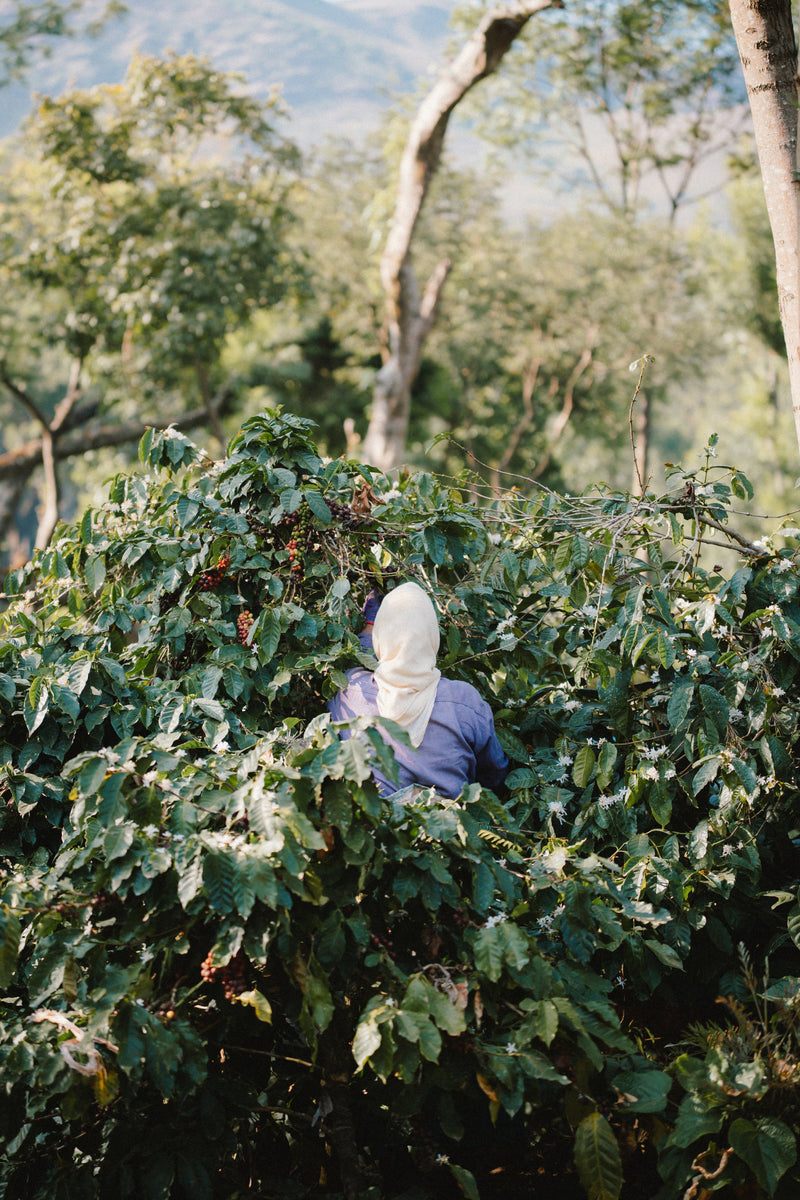
Women in coffee: The history, the gap, and the Burundi women closing it
In Burundi's northern hills, a coffee harvest has traditionally ended the same way. Women pick the cherries, sort them, and...
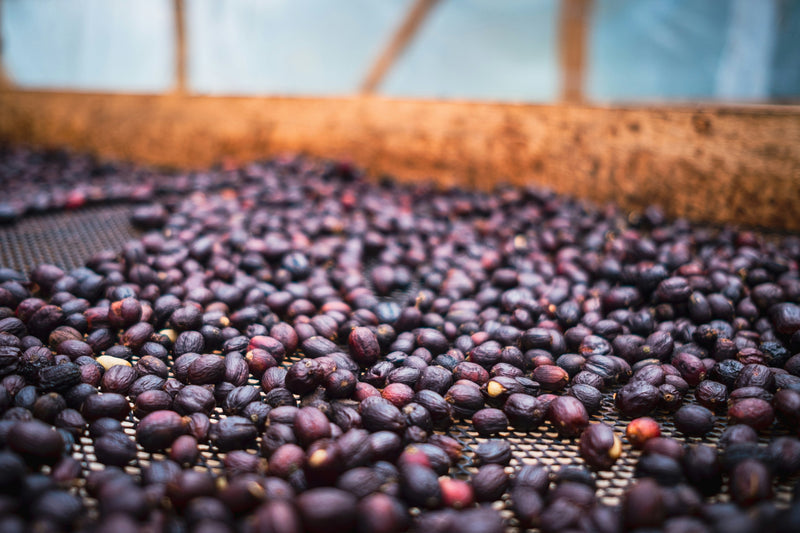
Natural process coffee: why some coffees taste like fruit
The first sip is the giveaway. Maybe it’s blueberry, or black cherry, or something closer to strawberry jam than anything...
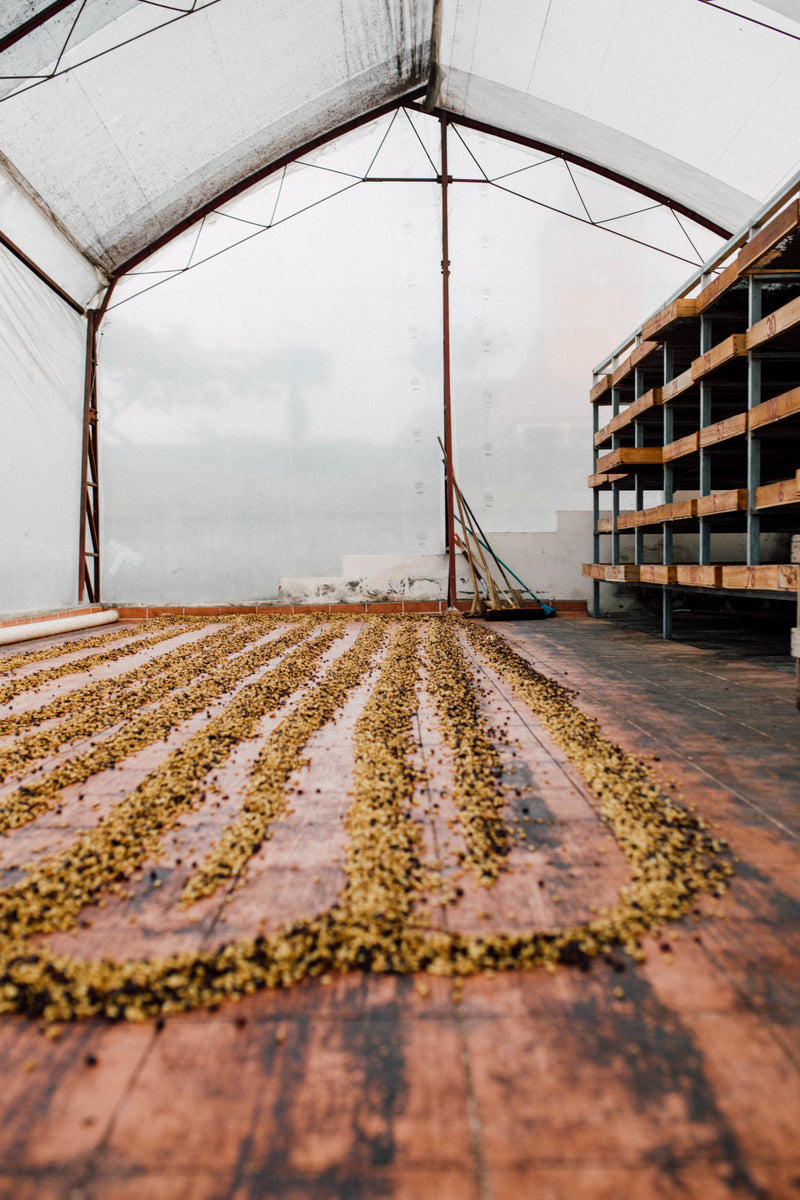
Honey processed coffee: the sweet spot between washed and natural
Read the label on a bag of "red honey" or "black honey" coffee for the first time and it's a...