

At home
Is making coffee at home worth it? What the 2026 coffee data says about your morning cup

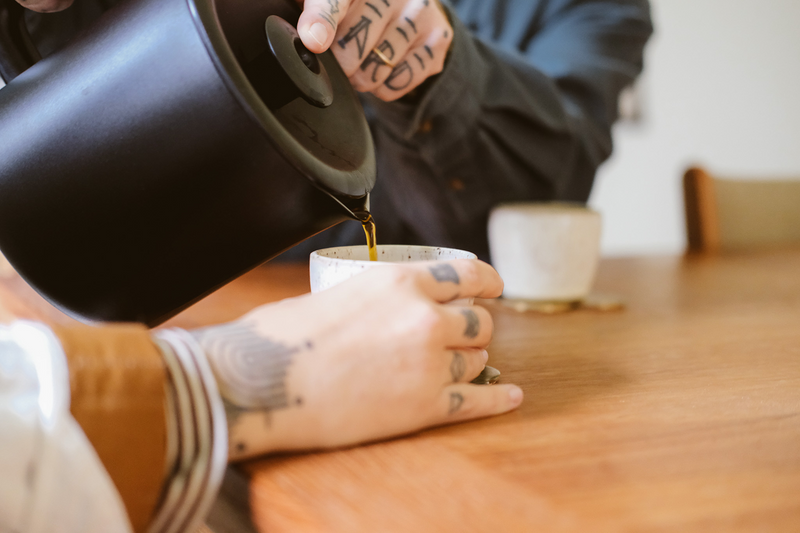
There's a kind of quiet that only exists before the day gets going. The kettle ticks as it cools. The grinder goes silent. Somewhere between the bloom and the last pour, you get about four minutes that belong entirely to you.
If that sounds like your morning, you're in good company. A lot of good company, as it turns out.
Yes, making coffee at home is worth it, and most Americans already agree.
According to the National Coffee Association's Fall 2026 report, 83% of people who drank coffee yesterday had at least one cup at home. At the same time, specialty coffee hit a record high, and retail coffee prices climbed about 10% in a year. Put together, the numbers point to one conclusion: home is where great coffee is easiest to get right, and where a little intention goes the furthest.
That's the short answer. Here's what the latest data actually shows, what it doesn't, and how to make your kitchen the best coffee shop you know.
What the 2026 coffee data says about drinking coffee at home
The National Coffee Association (NCA) publishes its National Coffee Data Trends report twice a year, and it's the most cited source on how Americans drink coffee. The 2026 numbers tell a pretty clear story.
Coffee is still America's favorite drink. 66% of American adults had coffee in the past day, more than any other beverage, tap water included. That figure has held steady since 2022.
Home is where most of it happens. In the spring report, 82% of past-day coffee drinkers had coffee prepared at home. By the fall report, that was 83%. Cafés, drive-thrus, and offices all matter, but the kitchen counter is still the center of American coffee.
What's in the cup is getting better. Specialty coffee reached a record 48% of adults in the past day. Over a full week, 58% of American adults had specialty coffee, up from 53% in 2022. Specialty also continues to out-drink traditional coffee on any given day, a lead it first took in 2024.
Coffee costs more than it used to. Retail coffee prices were up 10.3% year over year as of July's Consumer Price Index. And people are responding: in research from Mintel, 35% of surveyed consumers said they're making more coffee at home because of price increases.
Where we buy coffee for home is shifting. Grocery stores' share of at-home coffee purchases dropped from 42% in January to 35%, while mass merchandisers rose from 23% to 28%. People are shopping around.
A quick reality check on "the at-home coffee boom"
You'll see headlines claiming at-home coffee is surging. The data is more nuanced, and we think you deserve the real version.
At-home coffee is steady and dominant, not skyrocketing. The share of daily drinkers brewing at home barely moved this year (82% to 83%). Meanwhile, coffee away from home actually rose to its highest level since January 2020, driven largely by drive-thrus and app ordering.
So the real picture isn't "everyone's abandoning cafés." It's this: home remains where the vast majority of coffee is made, people are drinking better coffee than ever, and rising prices are making them think harder about where their coffee dollars go. That's exactly the moment when a great home ritual starts to make a lot of sense.
Why your kitchen can beat the café
Here's a hot take from Sean Stewart, Folk's Founder and one of roughly 500 licensed Q Graders in the U.S.:
"You can be a better barista in your house than about 90% of the baristas in cafes."
That's not a knock on baristas. It's about circumstances. A barista is pulling drinks for a line out the door, on equipment calibrated for speed, with coffee chosen to please the most people possible. At home, you have something no café can offer: time.
"You can be slow and focused and deliberate in the coffee you brew," Sean says. "And it's actually a Zen experience for you to brew coffee at home if you have the time or make the time."
There are a few other quiet advantages, too:
- Freshness. You grind right before you brew. Ground coffee starts losing aroma within minutes, so this alone puts you ahead of most batch-brewed café coffee.
- Your coffee, your choice. At a café, you drink what they bought. At home, you can drink a rare, single-farm micro-lot that only a few thousand people will ever taste.
- Consistency. Same water, same grinder, same recipe, every morning. That means when a coffee tastes different, it's because the coffee is different, which is the fun part.
- Ritual. Nobody is waiting behind you. You can smell the grounds, watch the bloom, and let your cup cool to the point where the flavors open up.
Is it cheaper to make coffee at home?
In almost every case, yes, even with great coffee.
Here's simple math. A 12-ounce bag of coffee is about 340 grams. A generous cup uses about 20 grams. That's roughly 17 cups per bag. So even a $30 bag of rare, high-scoring coffee works out to about $1.75 a cup. The more often you'd otherwise buy coffee out, the faster that gap adds up.

But we'd gently push back on making cost the whole story. The better question isn't "how do I spend less on coffee?" It's "how do I spend well on it?"
Think of it like wine. You could order a glass of the house red every night, or you could keep one bottle at home that you're excited to open. The second costs less per pour, and it's more memorable. Home coffee works the same way. When prices are rising across the board, a bag worth slowing down for is a small, everyday luxury that pays you back every single morning.
How to make coffee at home that's worth slowing down for
You don't need a $2,000 setup. Sean's advice, after years of cupping and talking with home brewers, comes down to three fundamentals.
"Get these three things right, and you're 90% of the way to exceptional coffee at home."
1. Water (it's nearly all of what's in your cup)
If your tap water has a noticeable taste or smell, your coffee will too. A basic filter pitcher fixes this for most people. Heat it to about 200 to 205°F, or just wait for the rolling boil to settle before you pour.
2. A burr grinder (the one upgrade that matters most)
Blade grinders chop beans unevenly, leaving a mix of powder and chunks. The powder over-extracts (bitter), the chunks under-extract (sour), and you get a cup that's somehow both. A burr grinder crushes beans evenly so you can taste what makes the coffee special. Good hand grinders start around $50.
3. A consistent ratio
Start between 1:16 and 1:17, meaning 16 to 17 grams of water for every gram of coffee. A simple kitchen scale makes this effortless, and it's the fastest way to stop getting a different cup every morning.
Start with one brewer and keep it simple
If you're new to pour-over, Sean recommends the Kalita Wave. Its flat bottom extracts evenly and is forgiving while you learn. "I brew with a Kalita almost every day," he says.
And here's the most useful piece of advice we can give: brew it the same way every day and let the coffee do the changing for you. When your method stays consistent, you start noticing what makes one coffee taste like citrus and brown sugar and another like jammy blackberry.
Sean learned that the long way. "Looking back on years of brewing, the biggest mistake I ever made was thinking that brewing needed to be more complex than it actually is," he says. "The simplicity of a Kalita Wave or V60, done the same way every time, is what really matters."
For the full walkthrough, from grind sizes to French press to flash-chilled iced coffee, read Sean's complete guide to brewing coffee at home.
The coffee matters more than the gear
Here's what the home-setup conversation often skips: the best grinder in the world can't add flavor that isn't in the bean.
That's why we think the record rise in specialty coffee is the most exciting number in this year's data. People aren't just making coffee at home. They're choosing coffee worth making.
At Folk, every coffee scores 86 points or higher on the specialty scale. At that threshold, flavors start to separate and become specific: not just "fruity," but strawberry jam or green apple; not just "chocolate," but dark chocolate with toasted almond. "You don't just accidentally get that quality," Sean says. "You have to put in a lot of hard work at the farm level to get a coffee that scores 86 and above." You can read more about why we only share 86+ coffees.
Those coffees are also rare. By the time we find one we love, there's often only enough to share with a few thousand people. Brewing it at home, slowly, on your own terms, is the best way we know to do it justice.
Making coffee at home: your questions, answered
Is making coffee at home worth it?
Yes. It's usually far cheaper per cup, it's fresher because you grind right before brewing, and you control the coffee you drink. 83% of daily U.S. coffee drinkers already have coffee at home, according to the National Coffee Association's Fall 2026 report.
Is at-home coffee consumption increasing in 2026?
It's holding steady at a very high level. The share of daily coffee drinkers who had coffee at home was 82% in spring 2026 and 83% in fall 2026. What is rising is specialty coffee, which hit a record 48% of adults in the past day.
Is it cheaper to make coffee at home than buy it at a coffee shop?
Almost always. A 12-ounce bag makes about 17 cups, so even a premium $30 bag works out to roughly $1.75 per cup.
Why does café coffee taste better than mine?
Usually it's one of three things: water, grind, or ratio. Filter your water, switch to a burr grinder, and weigh your coffee at about 1:16 ratio of coffee to water. Those three changes close most of the gap, and fresh, high-quality beans close the rest.
What do I need to make great coffee at home?
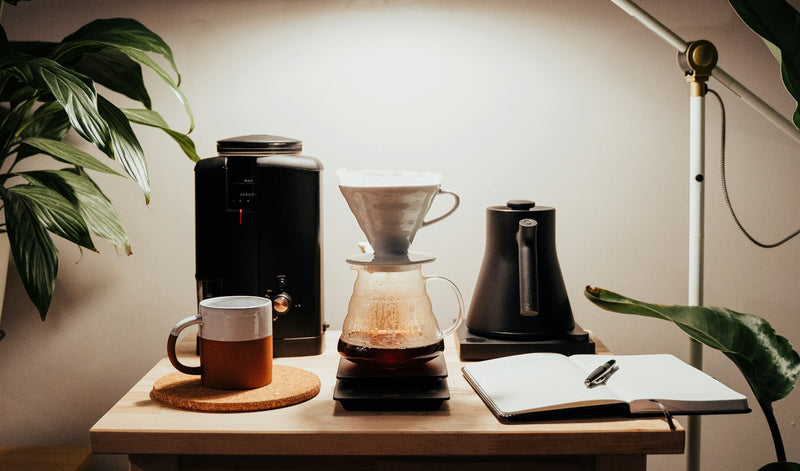
A burr grinder, a kitchen scale, a kettle, a simple brewer like a Kalita Wave or V60, filtered water, and whole-bean coffee. You can put together a great starter setup for around $100.
Why are coffee prices so high in 2026?
Retail coffee prices rose 10.3% year over year as of July 2026, according to the Consumer Price Index, following several years of higher costs for green coffee. Many people are responding by brewing more at home.
What's the best coffee to brew at home?
Whole-bean specialty coffee, ideally a single origin roasted recently. Higher-scoring coffees (86+ points) tend to have clearer, more specific flavors that really shine with careful home brewing. That’s everything we do at Folk.
Your kitchen is already where most of your coffee happens. Folk just makes it worth slowing down for. Every month, we send two rare, Q Grader-selected coffees scoring 86+, with simple brew guides, playlists, and little extras that make the ritual feel like yours. Explore this month's Volume or join the club.
Coffee subscription gift: how to give good mornings on repeat
Picking a gift for a coffee person is harder than it looks. They already have the grinder they love, the...

The complete guide to tasting coffee
Coffee is one of the most complex things you can have in your kitchen. That cup in front of you...
How to brew great coffee at home: ratios, grind, and water explained
A comprehensive guide from Folk's founder and Q Grade Making exceptional coffee at home doesn't require complexity. It requires presence,...