

Origins
India: Where coffee began as an act of rebellion

India's coffee origin starts with a smuggler.
Sometime in the 1600s, a Sufi saint named Baba Budan made the pilgrimage from India to Mecca. On his way home through the port of Mocha, in what's now Yemen, he came across coffee for the first time and understood immediately what he'd found. But Yemen controlled the coffee trade at the time by law, and green, fertile beans were forbidden to leave the country. Roasted or boiled beans only could cross, so nothing could ever be replanted.
Baba Budan tucked seven raw beans into his robes anyway and carried them home to the hills near Chikmagalur, in what's now the state of Karnataka. He planted them there, and those hills are still called the Baba Budangiri hills today. A shrine to him still stands among the coffee trees his seven seeds became,
The story of place
Today India grows its coffee almost entirely along the Western Ghats, the mountain range that runs down the country's southwestern edge, anywhere between 600 and 1,600 meters above sea level. Three states do nearly all the work: Karnataka, home to Chikmagalur and Kodagu (also called Coorg), which together account for more than 70% of national production; Kerala, particularly the Wayanad district; and Tamil Nadu, in the Nilgiri hills.
What sets these farms apart from many other coffee origins is that Indian coffee is almost always shade-grown under a two-tier canopy: native forest trees on top, and a second layer of planted trees, often silver oak, underneath. And tucked in among all of that, you'll typically find black pepper vines climbing the shade trees, cardamom growing in the understory, and sometimes orange or areca nut trees mixed in as well. It's not a coffee farm so much as a small, deliberately layered forest that happens to produce coffee as one of several crops.
This matters for two reasons. The first is practical. The Western Ghats are recognized as one of the world's major biodiversity hotspots, home to species found nowhere else on Earth, and shaded, polyculture farms like these are part of what keeps that ecosystem intact. Elephants still move through some estates during migration season, which is either enchanting or mildly inconvenient depending on the week.
The second reason is what it does to the coffee itself. Growing alongside pepper and cardamom, in the shade, at a slower pace than a sun-exposed monoculture would allow, gives Indian coffee a lot of its signature character before a single bean is ever processed.
The story of craft
India is unusual in that it grows serious quantities of both arabica and robusta, and grows both of them well. That wasn't always the plan. Arabica was the original crop, but a coffee leaf rust epidemic that swept through South Asia in the late 1800s devastated the arabica plantations and pushed growers toward the more disease-resistant robusta. Today, robusta makes up the larger share of the harvest, though the country's specialty arabica, grown at higher elevations, is what tends to reach discerning cups outside of India.
Processing follows two familiar paths and one that isn't familiar at all. Washed arabica, sold as "Plantation" coffee, is pulped, fermented, washed, and dried in the way you'd expect from most origins. Dry-processed, or natural, coffee is called "Cherry" locally and dried whole in the sun. Both are harvested during the same window, roughly November through February.
Then there's Monsooned Malabar, which doesn't really have an equivalent anywhere else. The story goes that in the age of sailing, green coffee bound for Europe spent months at sea, exposed to the humid monsoon winds on the voyage around the Cape of Good Hope. By the time it arrived, the beans had swelled, paled, and picked up a completely different flavor from the salt air and moisture. European buyers came to expect that taste, and when steamships cut the journey short enough that it stopped happening naturally, Indian producers figured out how to recreate it on land. Parchment coffee is laid out in open-sided warehouses along the Malabar coast during monsoon season, typically three to four months, where it absorbs the same humidity the ships once provided, and is raked and turned by hand the entire time.
It's one of the only coffee processing methods in the world built entirely around imitating a shipping accident, and it's still done by hand today because nobody has found a shortcut that gets the same result.
The story of flavor
Standard Indian coffee, whether arabica or robusta, tends to be full-bodied, low in acidity, and rounded rather than bright. Some of that comes from the growing conditions we mentioned earlier: cupping notes of spice, particularly something that reads like cardamom or pepper, aren't unusual, and it's genuinely hard to say how much of that is the terroir picking up its neighbors and how much is suggestion once you know pepper vines are climbing the same trees. Either way, it's a coffee that tends to be forgiving. If you've found some of the brighter East African coffees too sharp for an everyday cup, Indian coffee is usually the opposite end of that spectrum.
Monsooned Malabar is its own conversation entirely. It's low in acid almost to the point of tasting flat by design, with a heavy body and flavors people describe as musty, earthy, or even a little wild, closer to tobacco or cedar than to fruit or florals. It's polarizing. Some people find it their favorite thing in the world. Others taste it once and never order it again. We think that's exactly what makes it worth trying: there's very little else in specialty coffee that tastes remotely like it, and you can't really know where you land until you've had a cup.
Try this: If you want to taste the difference the shade and spice make, brew a standard Indian arabica as a filter or pour-over. Pay attention to body before you look for acidity, because body is where this coffee does its best work. If you can find a small batch of Monsooned Malabar, try it as a straight filter cup rather than in a blend, purely so you can taste what four centuries of imitating a sea voyage actually produced.
What India teaches
Every origin has a lesson buried in it if you look closely enough, and India's is about what happens when you refuse to accept a limitation as final. Baba Budan didn't accept that a trade ban meant coffee couldn't grow anywhere else. Generations of Malabar coast producers didn't accept that a flavor born from a slow sea voyage had to disappear once ships got faster. They rebuilt the conditions by hand instead.
There's something in that worth sitting with over a cup of your own coffee tomorrow morning: the most memorable things rarely arrive by the easy path. Sometimes they have to be smuggled in, replanted, or painstakingly recreated by hand, season after season, because someone decided they were worth the trouble.
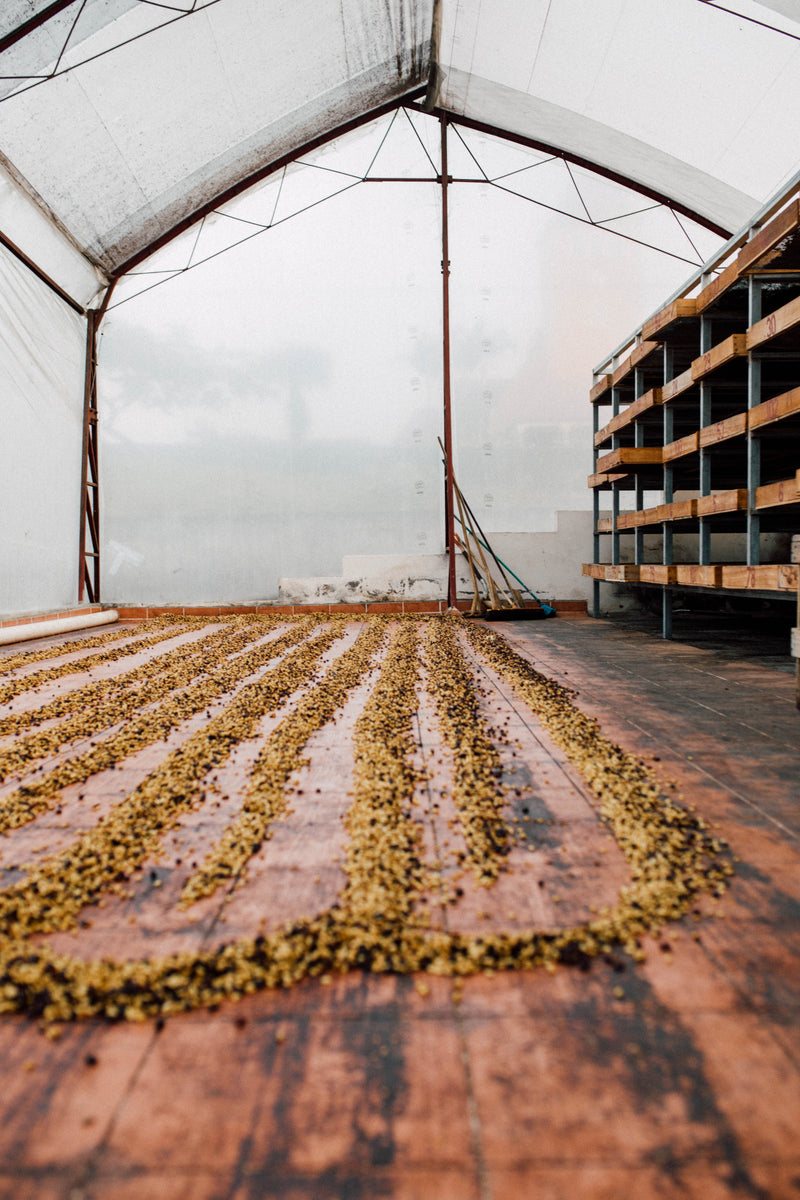
Honey processed coffee: the sweet spot between washed and natural
Read the label on a bag of "red honey" or "black honey" coffee for the first time and it's a...
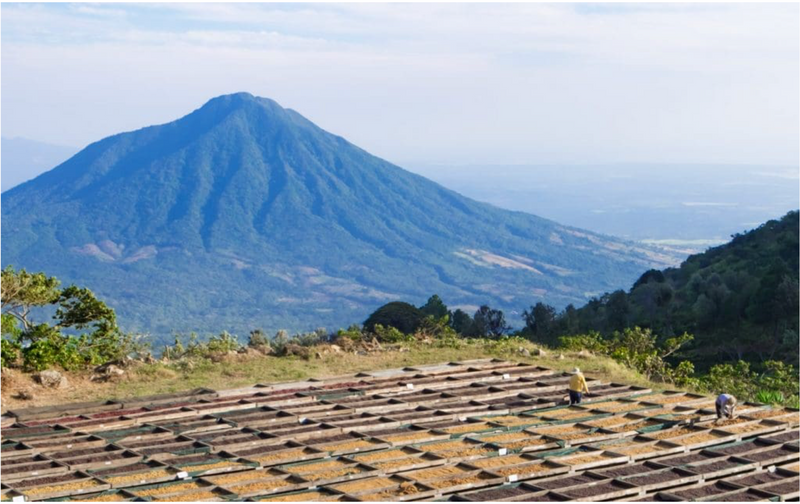
El Salvador: The origin that bred its own varietals
El Salvador's coffee story restarts in 2002, with a homecoming. Aida Batlle was 28 when she came back to take...
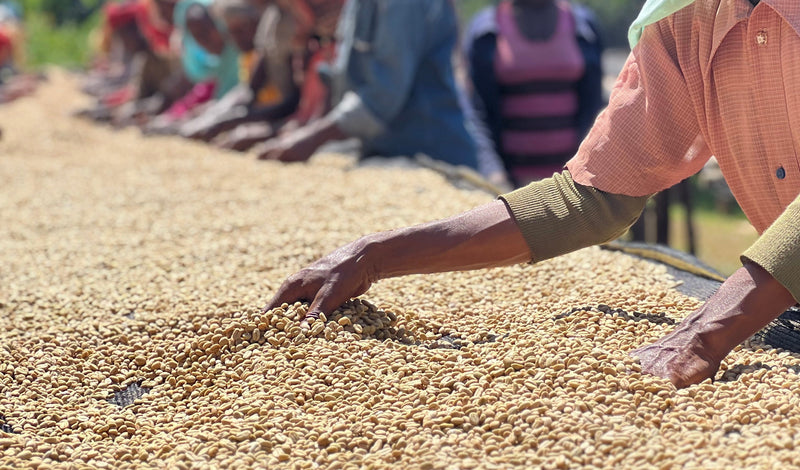
What is single-origin coffee? One farm, one cup, explained
Most coffee you've had in your life was a blend. Beans from a dozen farms, sometimes a dozen countries, roasted...