

From Folk
What is specialty coffee?

"Specialty" gets stamped on a lot of coffee bags, which makes it easy to assume it's just marketing. It isn't, or at least it shouldn't be. Specialty coffee is an actual, measurable standard, and once you know what it means, you'll never read a coffee bag quite the same way.
Specialty coffee is coffee that scores 80 or above on a 100-point scale, graded by a certified taster called a Q Grader. The score reflects quality across things like aroma, flavor, acidity, and balance. Below 80 is commodity coffee; 80+ is specialty; 86+ is genuinely exceptional.
So it's not a vibe. It's a number, given by a trained expert against a global standard. Here's how that works, and why it matters.
The 100-point scale
Specialty coffee is scored on the Specialty Coffee Association's 100-point system by a licensed Q Grader (think of them as a sommelier for coffee). They rate each coffee across attributes like fragrance, flavor, aftertaste, acidity, body, balance, and sweetness, and subtract for defects.
- Below 80: commodity coffee, the stuff in most cans, pods, and gas-station pots.
- 80 to 84: very good specialty coffee.
- 85 to 89: excellent and distinctive, the good stuff.
- 90+: rare and outstanding.
For context, every coffee in a Folk Volume scores 86 or above. We don't ship anything that doesn't clear that bar.
What actually makes a coffee "specialty"
A high score isn't luck. It's the result of care at every step:
- Where it's grown. The best coffees come from high elevations, where cool air slows ripening and builds complexity.
- How it's picked. Specialty cherries are harvested ripe, often hand-picked and sorted, instead of stripped from the branch all at once.
- How it's processed. The work after harvest (washed, natural, honey) changes the cup more than most people expect.
- How it's roasted. Specialty coffee is usually roasted lighter, to reveal the bean's character rather than bury it.
- How fresh it is. Roasted to order and brewed within a few weeks, not sitting on a shelf for months.
Specialty vs commodity coffee
Commodity coffee is grown for yield and traded as a bulk product, often blended and roasted dark so it tastes consistent (and forgettable). Specialty coffee is grown for flavor, kept traceable to a farm or region, and roasted to show off what makes it distinct. One is built to be fuel. The other is built to be tasted.
Common misconceptions
"Specialty just means expensive." Price and quality usually track together, because specialty coffee costs more to grow and source well, but the word refers to the score, not the price tag.
"It's only for coffee snobs." It's the opposite actually. The whole point is flavor you can enjoy, and you don't need any special knowledge to taste the difference.
"All 'specialty' on a label is legit." Not always, the term isn't tightly policed. The signals that back it up are a score, a named origin, and a roast date.
What this means for your cup
Specialty coffee is simply coffee someone took the trouble to do right, with the score to prove it. Once you've tasted a genuinely high-scoring cup, the difference is hard to unsee.
Folk was founded by a licensed Q Grader, and every Volume is two single-origin coffees scoring 86+, roasted to order and shipped with notes to help you taste what makes them special. Start with this month's Volume, or browse the Library. Your taste buds, your rules.
Sean Stewart is the Founder and Curator at Folk Coffee Club, and a licensed Q Grader.
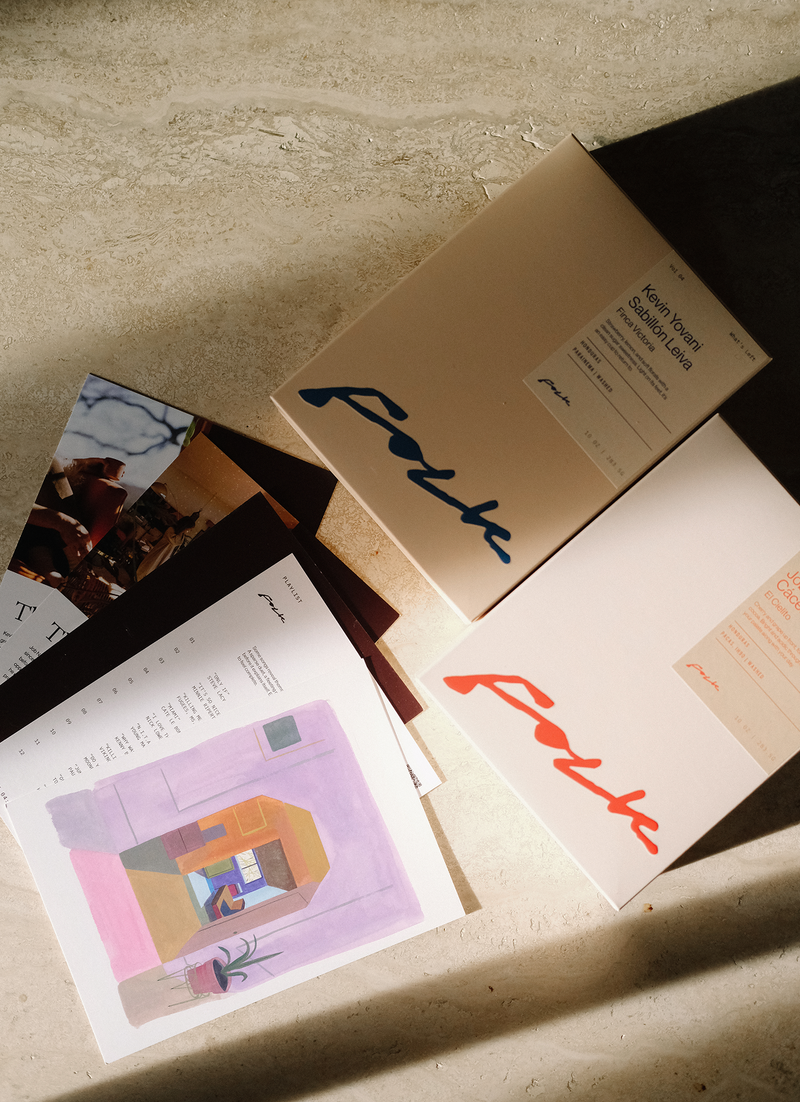
How do coffee subscriptions work? A simple guide
If you've ever finished a bag of grocery-store coffee, realized it was stale, and wished good coffee just showed up...

Meet Sean Stewart: Folk founder and Q Grader
Honestly, I got into coffee completely by accident. It started as a college job, working nights at a coffee shop...
Why Folk shares 86+ coffees
You know that moment when you taste a coffee that stops you mid-sip? When you can actually taste blueberry, not...