

Origins
Costa Rica: Where precision meets play

In most coffee-producing countries, the rules develop around the coffee. In Costa Rica, the coffee developed around the rules. For nearly three decades, this was the only country where growing anything other than Arabica is illegal. This restriction passed in 1989 and lifted in 2018. But by then it didn’t matter. The disciple had already become the culture.
But what makes Costa Rica fascinating isn't just the discipline. It's the creativity that discipline unleashed. This is the country that invented honey processing (a technique now used across Central America and beyond) and sparked a micro-mill revolution that put processing power directly into the hands of farming families.
Costa Rica doesn't just grow exceptional coffee. It's where some of specialty coffee's most important ideas were born.
The story of place
Costa Rica is tiny, but its geography reads like a geology textbook. Volcanic mountain ranges run the length of the country, creating valleys and microclimates that shift dramatically within a few kilometers. Drive an hour in any direction and you'll encounter different soil, different rainfall patterns, different temperatures.
Coffee grows across eight officially designated regions, each with its own personality. Tarrazú, in the southern highlands, is the most famous: high altitude, rich volcanic soil, and coffees known for their bright acidity, chocolate depth, and dried fruit sweetness.
But the real magic of Costa Rica is how much variety exists beyond Tarrazú. The West Valley yields coffees with stone fruit and honey sweetness. Tres Ríos, just east of San José, has been called "the Bordeaux of Costa Rica" for its delicately balanced, elegant cups. And then there's the Central Valley, where coffee was first planted in the late 1700s. It’s the origin point of an industry that would reshape the country's economy and identity.
What connects all eight regions is volcanic soil. Costa Rica sits on some of the most mineral-rich earth on the planet, constantly replenished by the same tectonic activity that built its mountains. That mineral density shows up in the cup as a kind of structural clarity: a clean, well-defined quality that makes Costa Rican coffees feel precise even when they're wildly complex.
The story of craft
Costa Rica has grown coffee since the 1770s, but its modern identity comes down to two decisions that no other origin has made.
The first: for nearly 30 years, it was illegal to grow anything other than Arabica. That restriction was lifted in 2018, but by then the national temperament had already been set. When you spend three decades competing on quality alone, no option to undercut your neighbor with cheaper, hardier Robusta, the mindset sticks. The only way to stand out was by being better, and that instinct didn't need a law to keep going.
The second happened more quietly, but arguably changed specialty coffee forever.
For most of the country's history, farmers picked their cherry and delivered it to large centralized mills (called beneficios) for processing. The mills did solid, consistent work. But they also flattened individuality. A farmer's cherries got mixed with everyone else's, and the result was reliable but rarely remarkable. Think of it like a co-op wine versus an estate bottle — competent, but missing the fingerprint.
Starting in the mid-2000s, farming families began building their own small processing facilities. Suddenly, a producer who'd spent decades handing off their cherry at the gate could decide exactly how it was washed, how long it fermented, how slowly it dried. And with that control came a question that changed everything: What if we don't wash off all the fruit?
That question gave us honey processing. The concept is deceptively simple: remove the skin but leave some or all of the sticky mucilage (the "honey") on the bean during drying. The result splits the difference between washed clarity and natural sweetness, with a silky body that feels almost luxurious. Producers refined it further into yellow, red, and black honey based on how much mucilage remains, each one a different expression of the same idea. A technique born in Costa Rica that's now used across the coffee world.
What we love about this movement is something you don't see in most origins: a younger generation that's staying. In many coffee-producing countries, the next generation is leaving farming behind. Here, they're building processing labs, entering Cup of Excellence competitions, and asking their own version of that original question: What else can we try?
The story of flavor
Costa Rican coffee is often described as "clean," and that's accurate, but it undersells what's happening in the cup. Think of it the way you'd describe a well-made Chablis: yes, it's clean, but within that clarity there's enormous depth.
The classic washed Costa Rican profile is bright and balanced, with citrus acidity. Think tangerine or Meyer lemon, layered over notes of milk chocolate, toasted almond, and brown sugar. The body is medium and smooth, the finish sweet and lingering.
Honey-processed Costa Ricans add another dimension. Yellow honeys tend to stay closer to the washed profile with a touch more sweetness. Red honeys bring stone fruit (nectarine, apricot) and a richer body. Black honeys push further toward tropical fruit and a syrupy, almost dessert-like quality, while still maintaining that structural clarity that defines the origin.
Try this: If you're tasting a honey-processed Costa Rican, pay attention to the texture first, before the flavor. Notice how it coats your tongue differently from a washed coffee. It’s a bit heavier, a bit silkier. That mouthfeel is the mucilage talking, and it's the reason this processing method has spread across the coffee world.
What Costa Rica teaches
For us, Costa Rica is a reminder that constraints breed creativity. An Arabica-only restriction could have made the country's coffee monotonous. Instead, it pushed producers to innovate in processing, in varietal selection, in the very definition of what specialty coffee could be. And when the law was eventually lifted, the commitment to quality didn't waver, proving that the best standards are the ones that outlive the rules that started them.
There's something worth noting about a country that responds to limitation with invention rather than frustration. Costa Rica didn't have the option to grow cheaper, easier coffee, so it became one of the most creative origins on earth. The honey process alone changed how the entire specialty industry thinks about what happens between harvest and roast.
Every origin is a conversation, not a collectible. And Costa Rica's conversation is about what becomes possible when precision and playfulness meet in the same cup.
Costa Rican coffee is featured in:
- Volume 06: Good Work
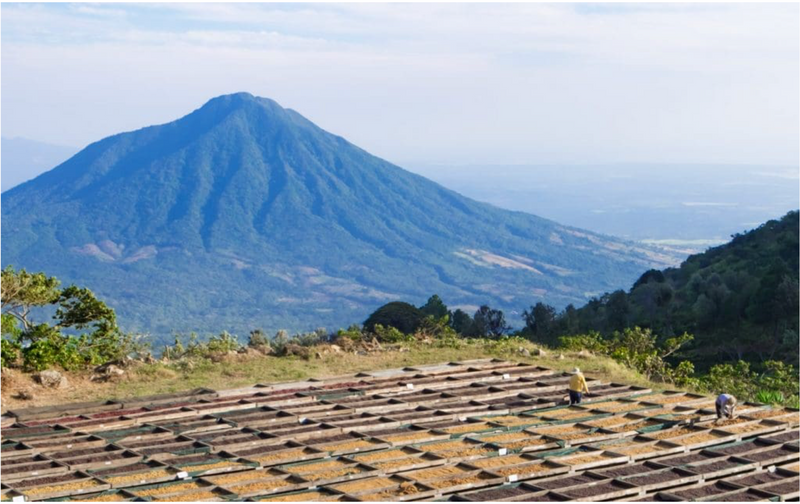
El Salvador: The origin that bred its own varietals
El Salvador's coffee story restarts in 2002, with a homecoming. Aida Batlle was 28 when she came back to take...
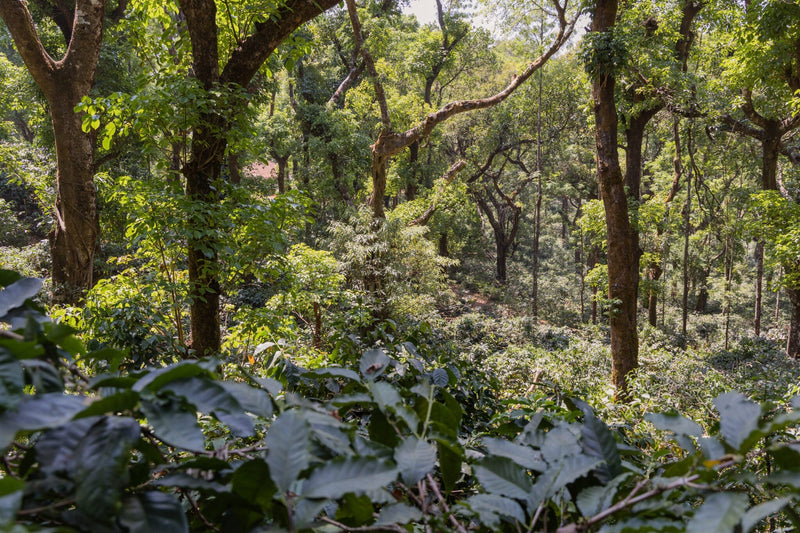
India: Where coffee began as an act of rebellion
India's coffee origin starts with a smuggler. Sometime in the 1600s, a Sufi saint named Baba Budan made the pilgrimage...
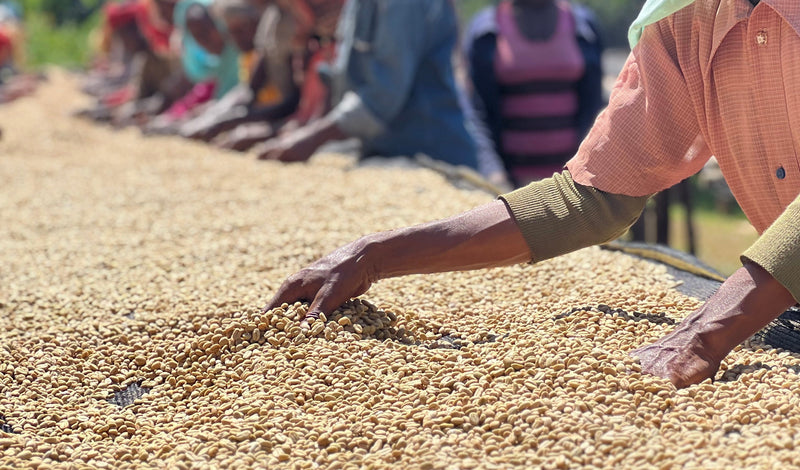
What is single-origin coffee? One farm, one cup, explained
Most coffee you've had in your life was a blend. Beans from a dozen farms, sometimes a dozen countries, roasted...