

Origins
What is anaerobic coffee processing? Think winemaking, but with coffee.

I didn't love anaerobic coffee the first time I tried it.
I'm Sean, Folk's founder and a licensed Q Grader, which is basically the coffee world's version of a sommelier. I've spent years tasting, scoring, and sourcing coffees from around the world. And when anaerobic processing first started showing up in tasting sessions, I was skeptical.
Not because the idea wasn't interesting. It was. But I've always believed that if a process doesn't make a coffee genuinely better, if it doesn't add something meaningful, then it's not worth the risk. Not for the producer. Not for the person drinking it.
So I want to walk you through anaerobic coffee the way I wish someone had explained it to me. What it actually is, what it tastes like, why it sometimes goes wrong, and why, when it goes right, it can be one of the most memorable cups you'll ever have.
The simplest way to understand anaerobic coffee processing
Put coffee in a barrel. Close the lid. Ferment it.
That's the short version. And it's not far off.
Anaerobic processing is a fermentation method where coffee cherries (or sometimes beans with the outer fruit already removed) are placed inside sealed containers, usually barrels or stainless steel tanks, with very little oxygen. A one-way valve lets gas escape but doesn't let air back in. And then the coffee sits, ferments, and changes.
If you drink natural wine, this should sound very familiar. You're putting a product inside a barrel, controlling how long it sits, monitoring oxygen release, managing yeast activity, and measuring pH and temperature along the way. In fact, it's pretty much the same thing. The parallels are so close that it's the single best way for most coffee drinkers to understand what's going on.
The key difference is that coffee actually has more identifiable flavor compounds than wine. (We're coffee nerds and still marvel at that fact.)
What happens inside the barrel
Inside that sealed environment, naturally occurring yeasts and bacteria start breaking down the sugars found in the fruit flesh of the coffee cherry (called mucilage). Without much oxygen around, the fermentation takes a different path than it would in an open-air tank. This creates a unique set of conditions for flavor development that you simply can't replicate any other way.
Just like a winemaker monitoring a barrel of fermenting grapes, a coffee producer is watching temperature, checking pH levels, and controlling how much pressure stays in versus how much gets released through the valve. Too much oxygen and you lose the anaerobic environment entirely. Too much pressure and you risk the chamber. The sweet spot is what separates a transcendent cup from one that tastes like kombucha gone wrong.
And just like wine, the land still matters. The altitude, the soil, the regional climate. Anaerobic processing isn't erasing the origin story. It's adding a new chapter to it.
Why does anaerobic coffee taste like wine?
This is the question I get asked the most, and the answer comes back to that barrel.
When yeasts and bacteria break down sugars in a controlled, oxygen-free environment, a lot more of the sugar content becomes available to the seed itself. The coffee is sitting in that water, absorbing all of those changes: the sugars, the fruit compounds, everything the process unlocks. You're essentially building an environment for complex flavor compounds to develop.
When a producer nails the fermentation time and temperature, you can get deep, rich red wine qualities with a heavy, almost coating mouthfeel. Chocolate. A milky sensation on the palate. I taste Concord grape a lot, or something like a full-bodied Cabernet Sauvignon. Sweet, rich, and full.
But it doesn't always go that direction. Some anaerobics come out bright and tart with a hard candy sweetness, very refined sugar quality, not deep and earthy at all. More on the raspberry, fruit-forward side. It all depends on the fermentation time, the water temperature, and the dozens of small decisions a producer makes along the way.
The flip side is that when it goes wrong, you know it immediately. Over-fermentaion is the biggest risk. If a producer goes too long, the coffee takes on a vinegar-like quality, that same sharp, fermented bite you might get from a really aggressive kombucha. It's a yeasty sparkliness that can be off-putting if you're not expecting it. And in most of the coffee-drinking world, that's not what people are looking for in their morning cup.
All of that flavor doesn't come easily
Anaerobic processing is one of the most difficult and volatile methods in coffee. Because every farm has its own microclimate, its own humidity and altitude and ambient conditions, you can't copy someone else's recipe and expect the same results. The process has to be learned farm by farm, harvest by harvest.
When anaerobic processing first hit, there wasn't a lot of training available. Producers were essentially experimenting, and the results were inconsistent: too fermented, too funky, very much for a niche audience. But over time they got better, got more precise about controlling their environments, and the process became more standardized. Not easy, but easier.
The drying stage is equally critical, and it's something most articles about anaerobic processing don't mention enough. Once the coffee comes out of the barrel, it has to dry quickly and evenly so fermentation doesn't continue unchecked. All of those fermented compounds that give you the good stuff (the complexity, the sweetness, the mouthfeel) can tip into the bad stuff if that final step isn't handled carefully. It's one more reason that a well-made anaerobic coffee is genuinely worth pausing to appreciate.

Is anaerobic coffee real innovation or just a trend?
There's a real conversation happening in specialty coffee about whether anaerobic processing is genuine innovation or something that's pushing producers into risky territory. I think about this a lot.
I believe it is genuine innovation. When done well, anaerobic fermentation creates flavors that are incredibly difficult to achieve through standard processing. There are things happening in that barrel (the complexity, the sweetness, the mouthfeel) that you'd be hard-pressed to replicate any other way. That's craft.
But innovation comes with responsibility. Specialty coffee has a pattern of asking too much from producers. A roaster gets excited about a processing trend, asks a farmer to try it, and the producer invests time, money, and labor into something volatile. If it doesn't work out, or if there's no buyer at the other end, they're stuck with an expensive, over-fermented lot they can't sell.
That's not just an abstract industry problem. It's someone's livelihood.
Everything has to be sustainable for it to work. That means the farmer's business, for the quality of the coffee, and for the trust between everyone involved. It's also why I make a distinction between traditional anaerobic processing (which, in my experience, amplifies what's already special about a coffee's origin) and more experimental approaches that introduce outside ingredients to build flavors that have nothing to do with where the coffee actually came from. The first feels like discovery. The second can start to feel like manufacturing.
How to brew anaerobic coffee at home
If you've got an anaerobic coffee in your hands and you want to actually experience what the process brings to the cup, try leaning into the richness rather than away from it.
Brew a little stronger than you normally would. If you usually go with a 1:17 coffee-to-water ratio, try dropping to 1:15 or 1:16. This opens up the sweetness of the coffee, tones down the perceived acidity, and really lets the full-bodied mouthfeel come through. It makes for a rich, heavy, almost red wine experience that's worth savoring slowly.
Look for those wine-like characteristics, the heavy body, the lingering sweetness, the depth. Some anaerobics will lean chocolatey and warm. Others will be more fruit-forward with a brighter structure. Both are worth noticing.
And if you've tried an anaerobic in the past and it wasn't for you, maybe it was too sour or too funky, I'd say try again. The process has come a long way. The coffees being produced now are cleaner, sweeter, and more refined than what was hitting the market even a few years ago. You might be surprised.
How I decide when to include an anaerobic coffees for Folk
In my day job, I taste hundreds of coffees a year. And with anaerobics in particular, there's a fair amount of fermentation fatigue. I get too many samples that are overpowering, too acidic, or just combative to the palate. So when something comes through that's genuinely special, it stands out immediately. That happened for the coffees in Volume 03: Under Pressure.
What I'm looking for is a coffee that isn't doing too much. It's not over-fermented. It's clean on the finish. It has great mouthfeel and sweetness without being funky in a way that would put people off. A little bit of funk is good, it can add complexity, but the finish has to be clean and sweet. That's what we're left with after we're done drinking, and if that final impression is positive, that's something worth sharing.
But it's not just about what's in the cup. I want to know that the producer can sustain the method. That they've done the research, that they have good controls, and that this is actually good business for them. A great score doesn't mean much if the process behind it isn't built to last.
That's the approach we take at Folk. Every coffee we share scores 86+ and comes from producers I trust, people who are doing this work with precision, patience, and sustainability in mind.

Worth slowing down for
When you finally taste an anaerobic that's right, it feels like more than just a cup of coffee. It's the result of someone's patience. Their willingness to risk getting it wrong, and their dedication to getting it right. That kind of care is exactly the kind of thing worth slowing down for.
Anaerobic coffees can be found in:
Volume 03: Under Pressure
And if you want rare coffees like these delivered to your door every month, along with guides, playlists, and little extras that make every cup something worth remembering, join the club.
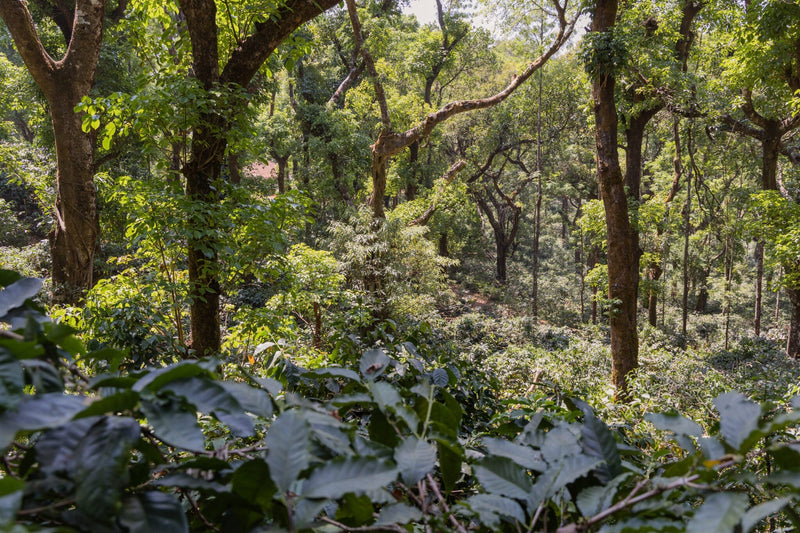
India: Where coffee began as an act of rebellion
India's coffee origin starts with a smuggler. Sometime in the 1600s, a Sufi saint named Baba Budan made the pilgrimage...
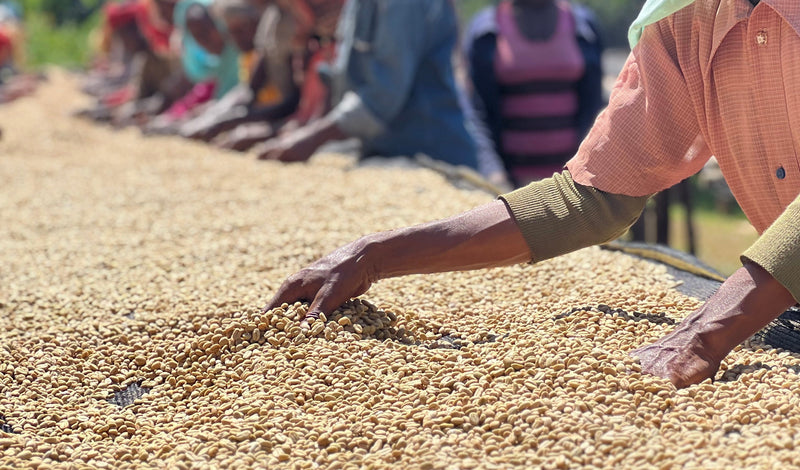
What is single-origin coffee? One farm, one cup, explained
Most coffee you've had in your life was a blend. Beans from a dozen farms, sometimes a dozen countries, roasted...

Ethiopia: Where coffee remembers its first morning
Walk into the highland forests of southern Ethiopia and you'll find coffee that nobody planted. It grows wild here, the...