

Origins
Honduras: The country between the lake and the mountain

Honduras rewards the ones who look twice.
Most coffee lovers can name Ethiopia, Colombia, or Guatemala. Honduras rarely comes up, even though it produces more coffee than any of them in Central America. Even though its best coffees have been quietly winning international competitions for two decades. Even though its hillsides grow beans with a clarity that stops you mid-sip.
That anonymity is an invitation. The coffees here don't need a famous name to be worth your attention. They just need you to slow down long enough to notice what's been here all along.
Honduras is a reminder that the most extraordinary things aren't always the most obvious.
The story of place
Honduras has only one lake, Lake Yojoa, and it sits in a volcanic basin in the western highlands, fed by underground springs and flanked by two national parks.
On the lake's western side, Santa Barbara Mountain rises to close to 2,800 meters, its upper slopes draped in a cloud forest. Coffee farms line the terrain between these two landmarks, suspended in a microclimate that exists almost nowhere else. Cool mist rolls off the water in the mornings. Afternoons bring warm sun. The volcanic soil, dark and mineral-rich, keeps renewing itself season after season.
This is the department of Santa Barbara, and it's where some of the most awarded coffees in the Western Hemisphere are grown.
The geography here does something specific. The lake moderates temperature and humidity while the mountain provides altitude. Together, they slow cherry development on the branch, which means more complex sugars, the kind of brightness that tastes more like fruit than anything sharp, and more depth in the finished cup.
Santa Barbara sits within the Opalaca growing zone, one of six designated coffee regions in a high-altitude stretch of Western Honduras. Elevations between 1,100 and 1,600 meters produce coffees with bright acidity, clean structure, and fruit that reads clearly without overwhelming.
But Honduras didn't always have a reputation for quality. For years, much of its best coffee was smuggled across the border and sold under Guatemala's name, because that label carried more weight with buyers. Honduran farmers did the growing. Someone else got the credit. That history makes what came next feel like more than just a quality upgrade.
That changed in the early 2000s, when national investment in processing infrastructure, quality training, and the Cup of Excellence program gave farmers both the tools and the incentive to reach higher.
The story of craft
By the early 2000s, coffee had been climbing the slopes around Santa Barbara for decades, and farmers were finally building something worth protecting.
Then came a reckoning.
In 2011 and 2012, coffee leaf rust, a fast-moving fungal disease, swept through Honduras and devastated farms across the country. For many producers, it wiped out everything. But the crisis became a catalyst. Farmers who rebuilt didn't simply replant the same trees. They introduced disease-resistant varieties. They invested in solar dryers and parabolic drying structures. They began separating their harvests into specialty-grade micro-lots for the first time.
One of the varieties that emerged from this era is Parainema, a hybrid developed by IHCAFE (Instituto Hondureño del Cafe), Honduras's national coffee institute. It was bred for rust resistance, but it also produces cups that defy expectations: bright citrus, floral sweetness, a clean finish. The assumption that practical varieties can't taste exceptional doesn't hold here.
The other variety common to this region is Pacas, an older Central American variety. It's a natural mutation of Bourbon, a coffee variety named after the island of Réunion first discovered in El Salvador in the late 1940s, valued for its sweetness and complexity at high elevation.
Both varieties thrive under the washed process, which dominates Santa Barbara's specialty production. In washed coffee, the fruit is removed from the seed early. Fermentation is measured, typically around 16 to 20 hours. The coffee is then washed clean and dried slowly, often in solar dryers that protect against Honduras's unpredictable rainfall. The intent isn't to add flavor. It's to clear space so the coffee's inherent character comes through without anything getting in the way.
Much of this work is supported by Beneficio San Vicente, a family-run milling operation that has become the backbone of Santa Barbara's specialty sector. Founded by Fidel Paz, San Vicente changed the incentive structure entirely. Instead of buying coffee from farmers and reselling it, they charge a flat milling fee and connect producers directly with international buyers. When quality goes up, the farmer is the one who benefits.
The story of flavor
Honduran coffee from Santa Barbara doesn't hit you with intensity. It meets you with clarity.
The first thing you'll notice is brightness. A lively, almost sparkling acidity that feels more like biting into fresh fruit than anything sharp or sour. Depending on the lot, that brightness might carry cherry and grape, or it might lean toward strawberry and lemon. Either way, it's direct.
As the cup develops, the sweetness begins to fill in around the edges. Not sugary sweetness, but something cleaner. Brown sugar. Soft florals. A dry cocoa finish that lingers without overstaying. There's a quiet backbone underneath all of it that keeps the cup from going soft, even as it opens up.
What you're tasting isn't filtered through processing choices or added by technique. It's the coffee itself. The washed process gives Santa Barbara's coffees a transparency that's almost startling. There's nothing masking the coffee's true character. What you're tasting is altitude, variety, soil, and the accumulated decisions of the person who grew it.
What to notice
The real reward comes as the temperature drops, so don't rush this one.
Hot: you'll get the brightness first. A lively, almost sparkling quality at the front of the sip.
Warm: the fruit shifts. Cherry or strawberry notes that felt fleeting start to settle in and open up.
Cool: the sweetness rounds out, the finish gets longer, and something quieter shows up underneath, a soft cocoa or brown sugar note that was there all along, just waiting.
Try this: Brew a cup and taste it at all three stages before you decide what you think of it. It's the same coffee telling you three different things.
What Honduras teaches
What stays with us about Honduras is the distance between reputation and reality.
For years, this country produced some of Central America's finest coffees with very little recognition. Producers kept refining their work anyway. Sorting more carefully. Fermenting more precisely. Drying more patiently. Not because anyone was watching, but because the work itself mattered.
There's something in that approach worth sitting with. The idea that quality doesn't require an audience. That the most meaningful things are often built quietly, over time, by people who care more about getting it right than getting credit.
Honduras is proof that you don't need a famous name to grow something extraordinary. Sometimes you just need the patience to keep showing up.
Honduran coffee is featured in:
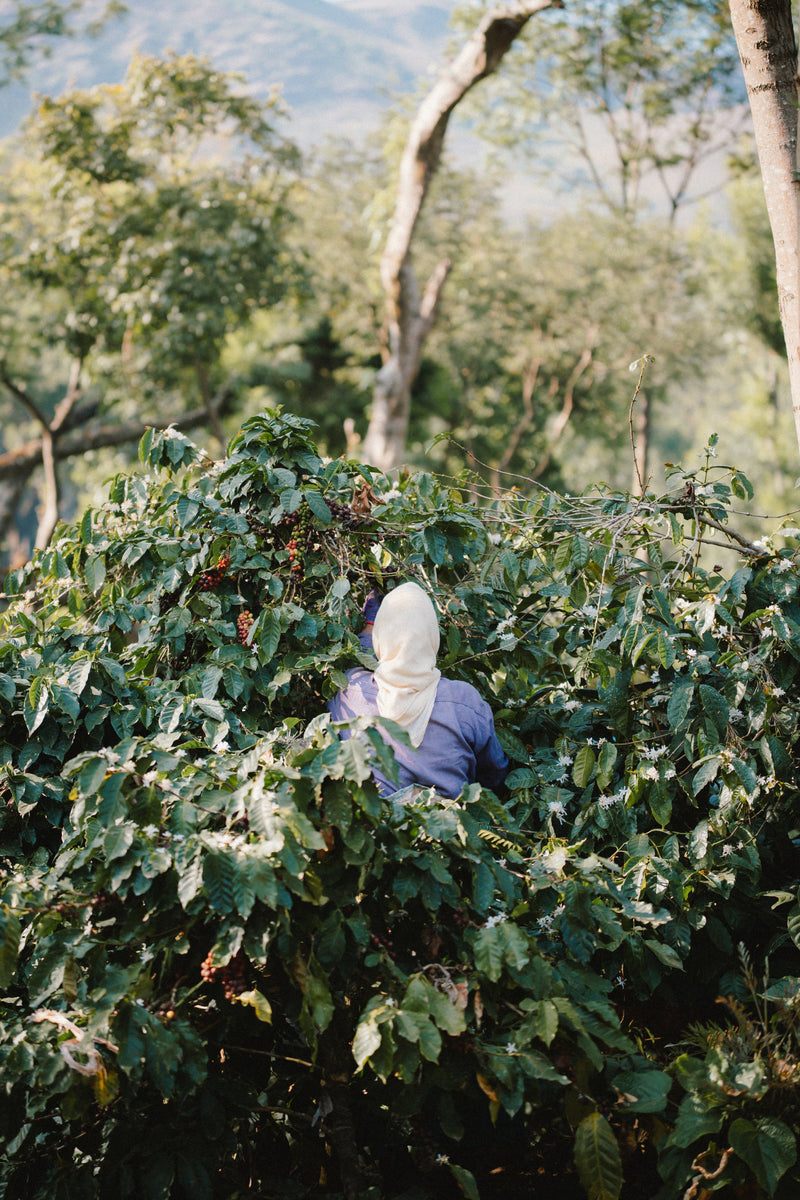
Women in coffee: The history, the gap, and the Burundi women closing it
In Burundi's northern hills, a coffee harvest has traditionally ended the same way. Women pick the cherries, sort them, and...
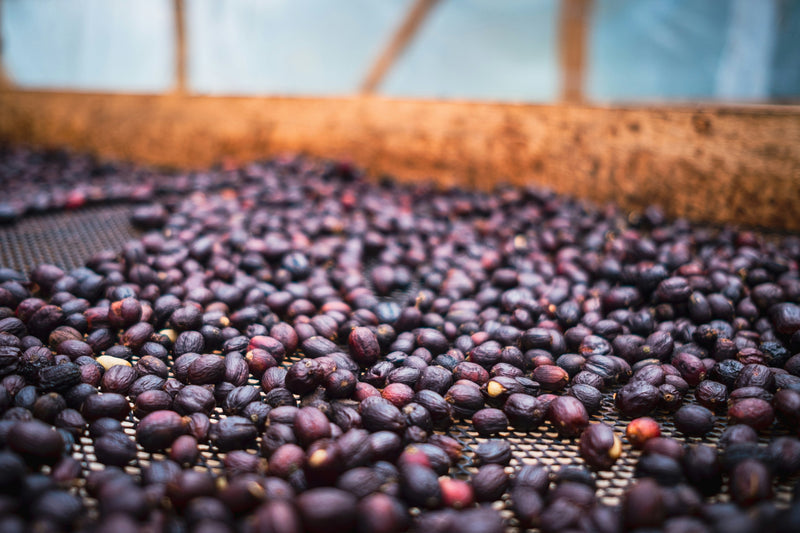
Natural process coffee: why some coffees taste like fruit
The first sip is the giveaway. Maybe it’s blueberry, or black cherry, or something closer to strawberry jam than anything...
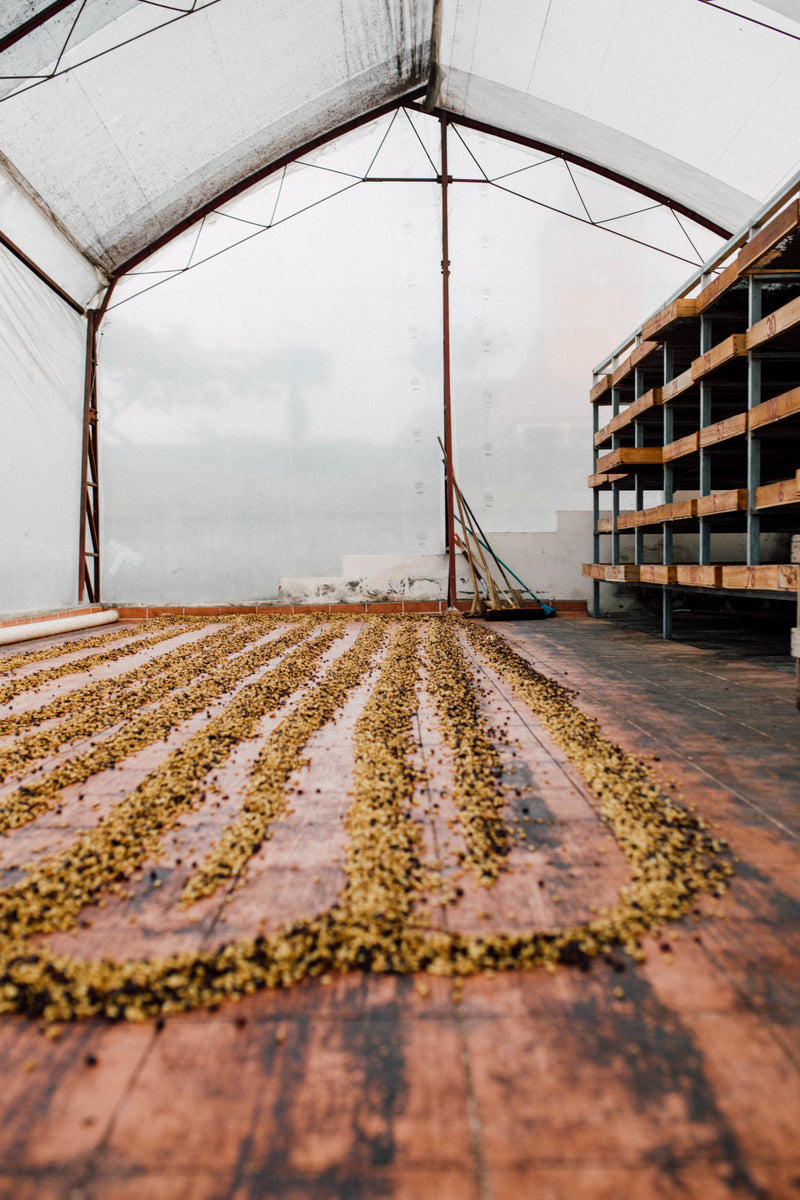
Honey processed coffee: the sweet spot between washed and natural
Read the label on a bag of "red honey" or "black honey" coffee for the first time and it's a...